
Christchurch
A city rebuilding itself in public, and the gateway to the Southern Alps.
Ōtautahi — Christchurch — is the South Island's largest city and was long known as the most English city outside England. The earthquakes of 2010 and 2011 changed that permanently. What stands now is a genuinely interesting mix of Victorian survivors, empty lots and confident new architecture.
After the earthquakes
The magnitude 6.3 quake of 22 February 2011 killed 185 people and destroyed much of the central city, including ChristChurch Cathedral. The rebuild has been slow, contested and in places inspired.
Shigeru Ban's Transitional Cathedral — the 'Cardboard Cathedral' — was built from 98 cardboard tubes and remains in use. Quake City tells the story directly and unsentimentally. The restored New Regent Street and the Riverside Market show what the recovery looks like when it works.
The Garden City still earns the name
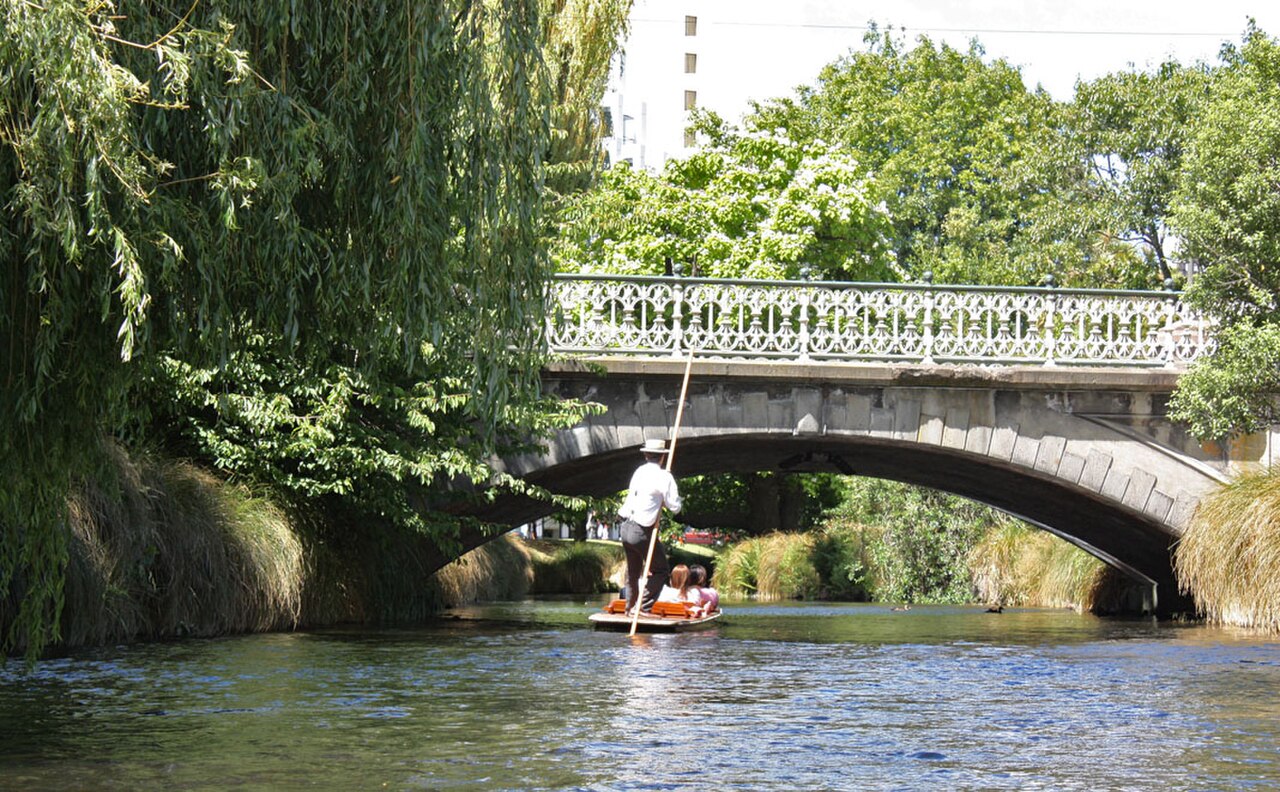
The Botanic Gardens, founded in 1863, cover 21 hectares inside a loop of the Avon River and sit within the 165 hectares of Hagley Park. Punting on the Avon — a flat-bottomed boat and a man with a pole — is unashamedly touristy and completely charming.
Heritage trams loop the central city, and the Port Hills gondola lifts you above the Lyttelton crater for views across the Canterbury Plains to the Alps.
A base for bigger country
Akaroa, 75 minutes away on Banks Peninsula, was founded by French settlers in 1840 and still carries French street names. Its harbour is home to Hector's dolphins, the world's smallest and rarest marine dolphin.
The TranzAlpine train crosses to Greymouth in four and a half hours through Arthur's Pass and the Southern Alps, and is regularly listed among the world's great rail journeys. Christchurch is also the historical staging post for Antarctic expeditions — Scott and Shackleton both departed from Lyttelton.
Header photograph by Rexness via Wikimedia Commons, licensed CC BY / CC BY-SA.