
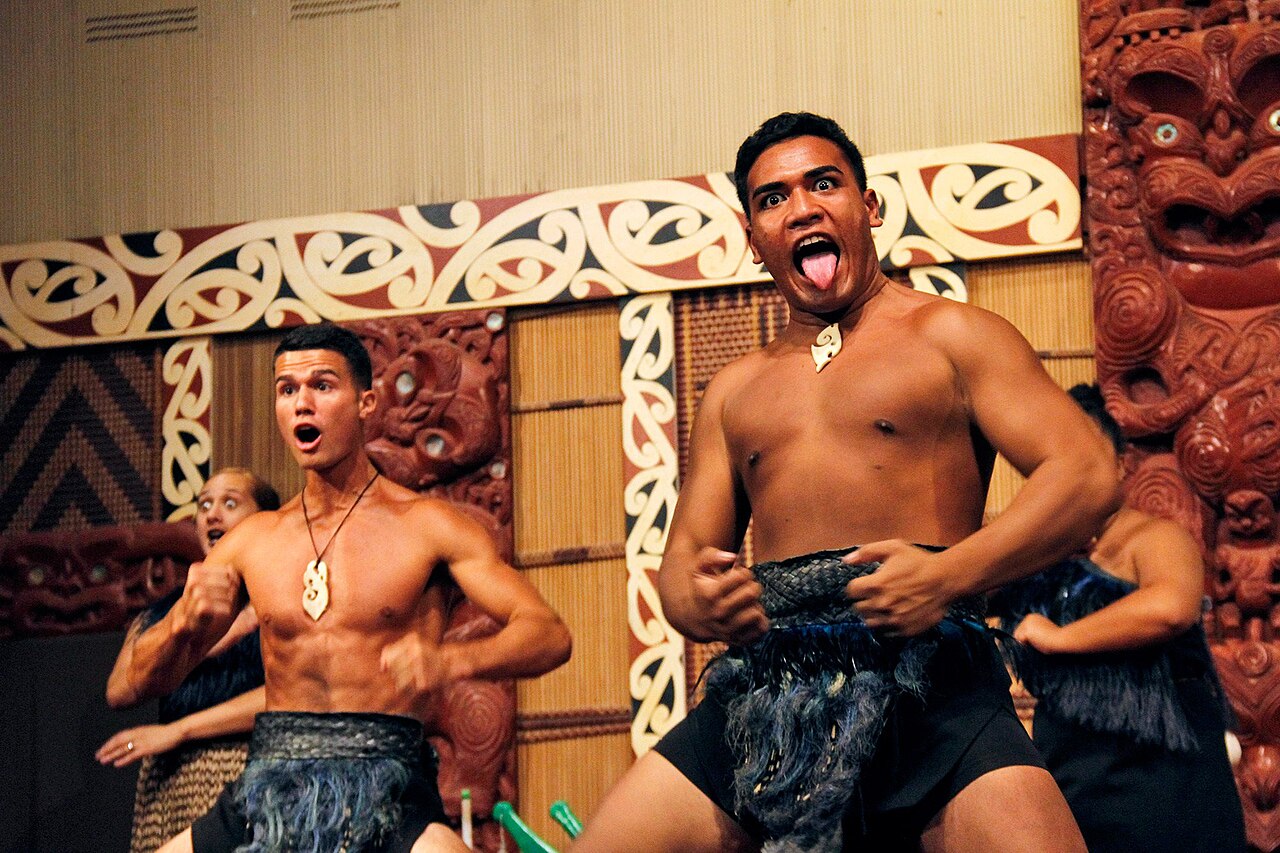
Māori Cultural Tours
A living culture, not a museum exhibit — and best experienced from the people whose culture it is.
Māori are the tangata whenua, the people of the land, having arrived from East Polynesia around 1300. Te reo Māori is an official language, the haka opens international rugby matches, and marae remain active community centres. Cultural tourism here is a real economic sector run largely by iwi themselves.
What a cultural evening actually involves
The standard format begins with a pōwhiri, a formal welcome that establishes whether visitors come in peace. A chosen representative from your group is challenged by a warrior, and accepting the offered token completes the ritual. It is genuinely the same protocol used to welcome dignitaries onto a marae.
That is followed by kapa haka — waiata (song), poi, and haka — and then a hāngī, food cooked in an earth oven over heated stones for several hours. In Rotorua, some operators use geothermal steam instead of a fire pit.
Te Pā Tū, Mitai, Tamaki and Whakarewarewa in Rotorua are the best-known. Ko Tāne in Christchurch and Ko Tane at Willowbank offer South Island equivalents.
Beyond the evening show
The Waitangi Treaty Grounds in the Bay of Islands is the single most historically significant site in the country, where the Treaty was signed in 1840. Its guided tours and cultural performance sit in the actual location the events happened.
Te Puia in Rotorua houses the New Zealand Māori Arts and Crafts Institute, where whakairo (carving) and raranga (weaving) are taught as living trades rather than heritage demonstrations.
Increasing numbers of iwi-run operators offer walking tours, waka (canoe) paddling, and forest experiences framed by whakapapa and local pūrākau — often far more substantial than the dinner shows.
Being a good guest
Remove shoes before entering a wharenui. Do not sit on tables or pillows — surfaces that touch food and surfaces that touch heads are kept strictly separate. Do not photograph during a pōwhiri unless told it is fine.
Some sites are tapu (sacred) and carry restrictions on eating, drinking or touching water. These are not suggestions for atmosphere; they are the actual rules of the place.
Header photograph by Raymonst3 via Wikimedia Commons, licensed CC BY / CC BY-SA.