
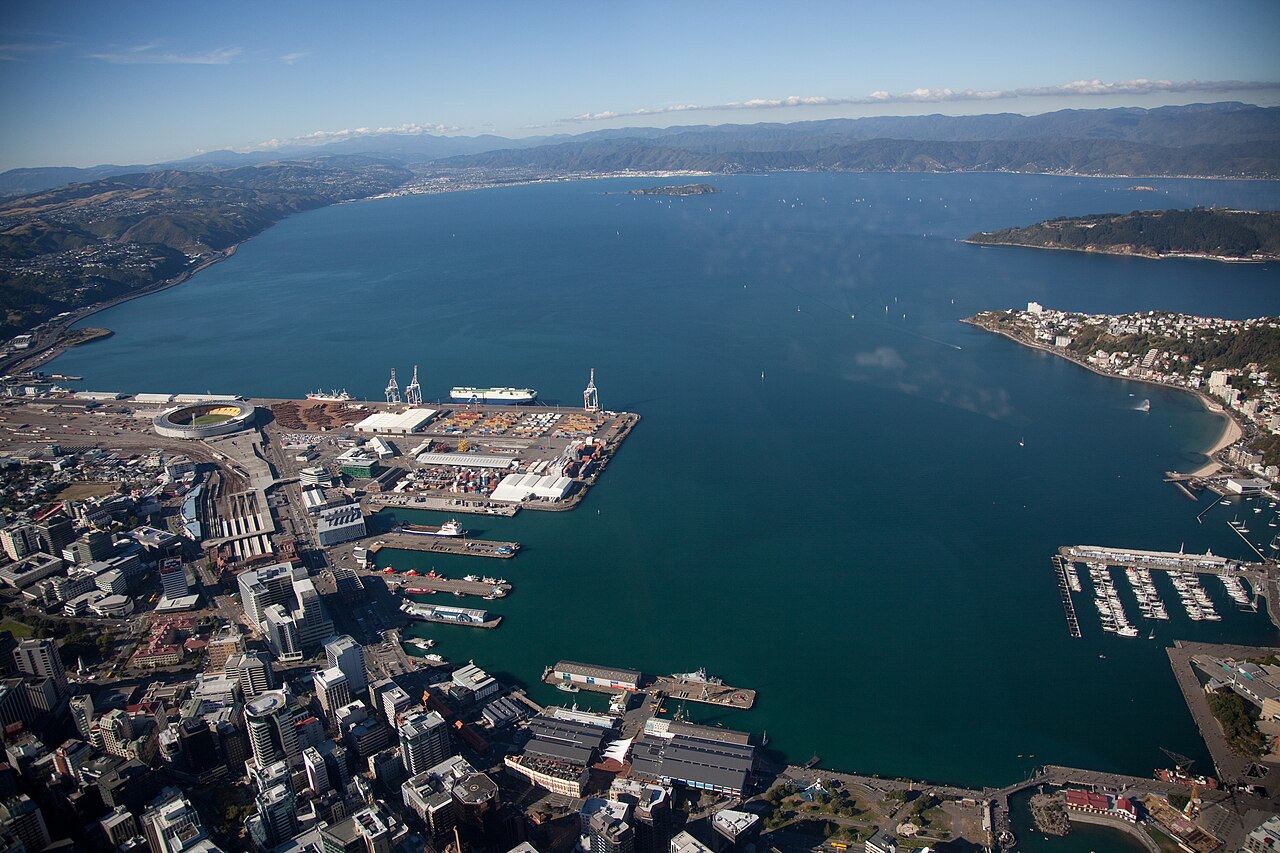
Wellington
The world’s southernmost capital: coffee, cinema and a great deal of wind.
Te Whanganui-a-Tara — Wellington — became the capital in 1865 and is the most walkable major city in New Zealand, squeezed between a harbour and steep hills so that almost nothing is more than 20 minutes on foot. It is also demonstrably windy: the Cook Strait funnels the roaring forties straight through the city.
Te Papa, free and enormous
The Museum of New Zealand Te Papa Tongarewa opened in 1998 on the waterfront and charges nothing for general entry. Allow half a day minimum.
Its Gallipoli: The Scale of Our War exhibition, built with Weta Workshop, presents New Zealand soldiers as 2.4-times-life-size sculptures with visible pores and tear ducts. It is one of the most affecting museum installations anywhere and it is included in the free entry.
The film capital
Peter Jackson built his production empire in the suburb of Miramar, and Weta Workshop — responsible for The Lord of the Rings, Avatar, District 9 and much else — runs public tours of its facilities.
The hills around the city doubled for a great deal of Middle-earth. Mount Victoria's pine forest was the Hobbits' 'get off the road' scene; Kaitoke Regional Park north of the city was Rivendell.
Coffee, beer and native birds
Wellington roasts and drinks a serious amount of coffee, with more cafés per capita than New York. Cuba Street is the bohemian spine of the city, complete with the much-loved and much-mocked Bucket Fountain.
Zealandia is a 225-hectare valley ringed by a predator-proof fence, restocked with species that had not been seen on the mainland for a century. Kākā, tūī, takahē and tuatara live there wild, and the night tour offers a genuine chance of seeing a little spotted kiwi.
The 1902 cable car climbs from Lambton Quay to Kelburn, where you can walk back down through the Botanic Garden.
Header photograph by russellstreet via Wikimedia Commons, licensed CC BY / CC BY-SA.