
Glacier & Alpine
Two glaciers that flow almost to sea level through temperate rainforest.
Franz Josef and Fox on the West Coast are among the very few glaciers in the world that descend into rainforest at a low enough altitude to be reached easily. They sit inside Westland Tai Poutini National Park, part of the same World Heritage area as Fiordland.
Why they come down so far
The Southern Alps intercept moisture off the Tasman Sea and dump enormous snowfall in the névé at the top. That weight pushes the ice downhill faster than it can melt, carrying it to about 300 metres above sea level — remarkable for the latitude.
Both glaciers have retreated substantially since the 1990s. The valley-floor walks that once reached the terminal face now stop well short of it, which is why heli-hiking has become the standard way to actually stand on the ice.
Heli-hike or walk
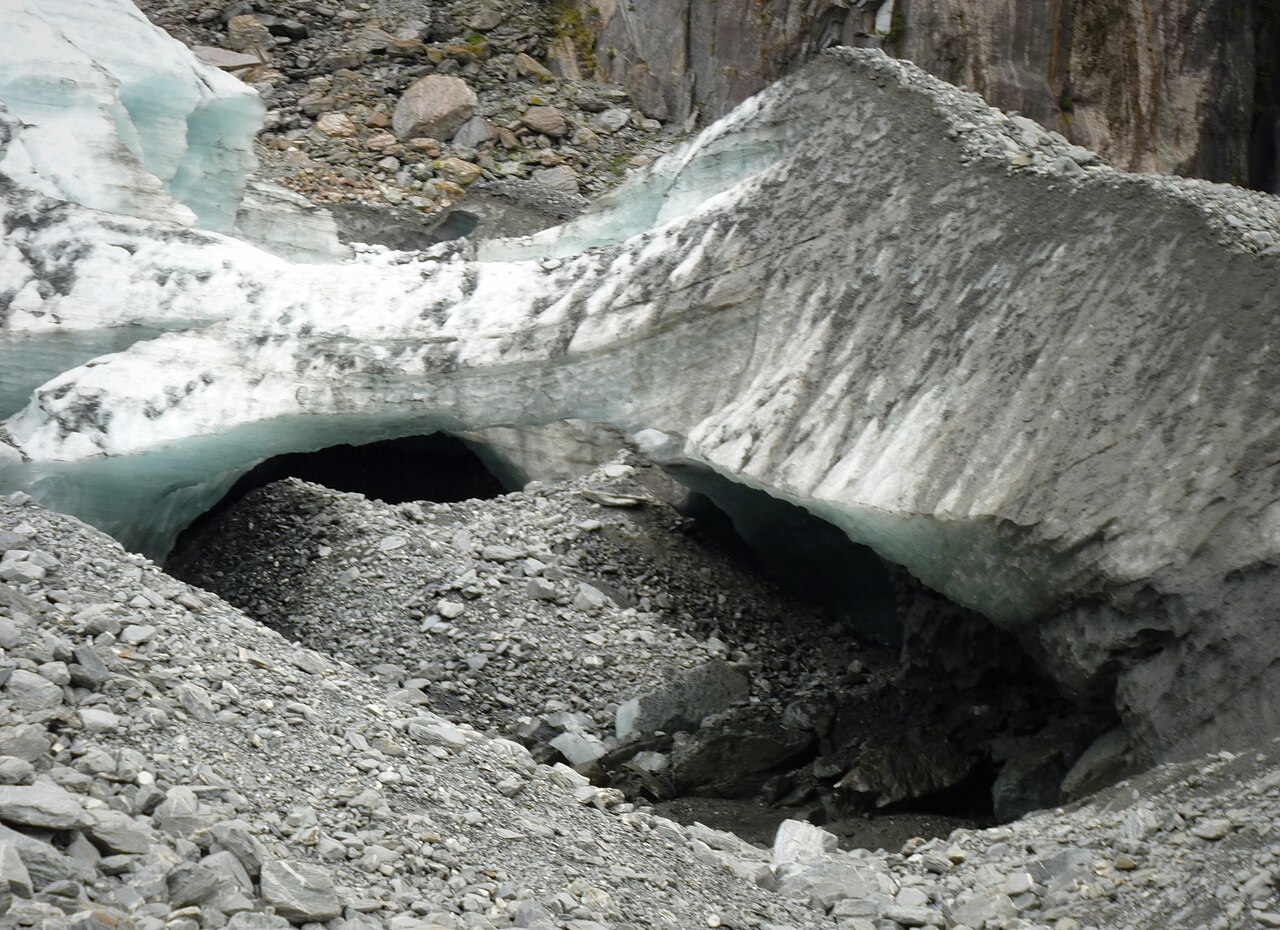
A heli-hike lands you on the upper glacier for two to three hours of guided walking among blue ice, crevasses and meltwater caves, with crampons and boots supplied. It is weather-dependent and cancels often.
Valley walks to the viewpoints are free, take one to two hours return, and require no guide — but you will be looking at the terminal face from several hundred metres away, behind rope lines that exist because rockfall from these faces kills people.
Aoraki and the Tasman
On the eastern side of the divide, Aoraki/Mount Cook National Park holds New Zealand's highest peak at 3,724 metres and the Tasman Glacier, the country's longest at 23 kilometres.
The Tasman now terminates in a growing proglacial lake, and boat trips run among icebergs calved off the face. The Hooker Valley Track — three hours return, flat, with three swing bridges — is the best short walk in the country and needs no guide.
Header photograph by Michal Klajban via Wikimedia Commons, licensed CC BY / CC BY-SA.